

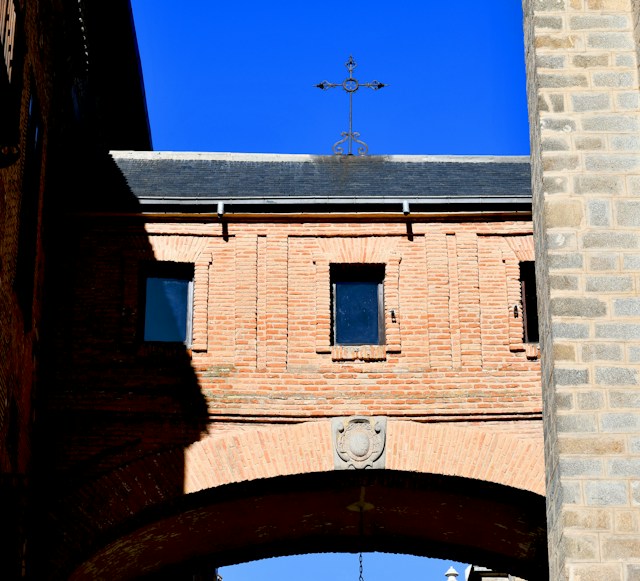
Toledo Spain: The Hilltop City That Makes Madrid Feel Brand New
I’ll be honest. The first time someone told me to visit Toledo, I thought of Ohio.
That’s not as dumb as it sounds. Toledo, Ohio got its name from this place, and the two have been sister cities since 1931. But the original sits on a granite hill about 45 miles south of Madrid, with the Tagus River wrapped around three sides of it like a moat.
Toledo Spain is old. Really old. The Romans were here, then the Visigoths made it their capital, then came the Moors, and then the Christian kings of Castile. For a long stretch it was the most important city in the country, right up until Philip II moved the royal court to Madrid in 1561.
And here’s the thing: when the court left, the building boom left too. So the old town kind of froze. What you walk through today is a tangle of medieval lanes that never got bulldozed for a boulevard. UNESCO put the whole historic center on its World Heritage list back in 1986.
So is it worth a day of your Spain trip? Yeah. I’d even say it’s worth a night. Let me explain.
Why do they call it the City of Three Cultures?
You’ll see that nickname on every brochure. It refers to the Christians, Muslims, and Jews who lived side by side here during the Middle Ages.
Was it always peaceful? No, and historians will tell you the “golden harmony” story gets oversold. But the mix was real, and you can still see it in the buildings. A mosque from the year 999 sits a short walk from two medieval synagogues, and both are a few blocks from one of the biggest Gothic cathedrals in Spain.
That mix shaped a style you’ll hear guides call Mudéjar. Think Christian churches built with Islamic brickwork, horseshoe arches, and carved plaster. Once you spot it, you’ll see it all over town.
It also made the city a center of learning. In the 12th and 13th centuries, scholars here translated Arabic and Hebrew texts into Latin, which is how a lot of Greek science and philosophy found its way back into Europe. Not bad for a town of about 85,000 people today.
Getting to Toledo Spain from Madrid without losing your mind
Good news: this is one of the easiest day trips in Europe.
The fast train leaves from Madrid’s Puerta de Atocha station and takes roughly 33 minutes. That’s shorter than most American commutes. Seats are reserved and trains do sell out on weekends and holidays, so buy your ticket ahead of time. Buy the return too.
Here’s a quick look at your options.
| How you go | Rough travel time | Good to know |
|---|---|---|
| High-speed train from Atocha | About 33 minutes | Reserved seats; book ahead on weekends |
| Bus from Plaza Elíptica | About 1 to 1.5 hours | Cheaper, more departures, direct and slower routes |
| Rental car | About 1 hour | Park outside the walls; don’t drive in the old town |
| Guided tour | Half or full day | Easy, but you’re on someone else’s clock |
One small digression. The Toledo train station is a sight on its own. It was built in the early 1900s in a Neo-Mudéjar style, with tilework, stained glass, and a clock tower. Take two minutes to look around before you rush out.
From the station, it’s about a 20-minute walk to the old town, and the last part is uphill. You can also grab a city bus or a taxi to Plaza de Zocodover, the main square. And if you walk, look for the public escalators built into the hillside. Your calves will thank you.
What should you see first?
Look, you can’t see it all in a day. Don’t try. Pick four or five places and leave room to get lost, because getting lost is half the fun here.
These are the ones I’d put at the top:
- Toledo Cathedral. Construction started in 1226 and wrapped up in 1493. The sacristy alone holds paintings by El Greco, Goya, and Velázquez.
- Church of Santo Tomé. It’s small, and people line up for one painting: El Greco’s “The Burial of the Count of Orgaz.”
- Synagogue of Santa María la Blanca. White horseshoe arches, quiet light, and almost no furniture. It takes 15 minutes and sticks with you.
- Synagogue of El Tránsito. It houses the Sephardic Museum and has some of the finest carved plasterwork in the city.
- Monastery of San Juan de los Reyes. The two-story cloister is the star. Check out the iron chains hanging on the outside walls.
- Mosque of Cristo de la Luz. Tiny, about a thousand years old, and still standing.
- The Alcázar. The big square fortress on the highest point of the hill, now home to Spain’s Army Museum.
A word about El Greco, since his name is everywhere. He was born in Crete, trained in Italy, and showed up here in 1577. He stayed until he died in 1614. Those long, stretched-out figures and stormy skies? He painted them in this town, and plenty of his work never left.
You know what? The best view isn’t inside any building. It’s from the Mirador del Valle, a lookout across the river. The whole city stacks up in front of you, cathedral spire on one side and the Alcázar on the other. Go near sunset if you can. A taxi or the tourist bus will get you there, or you can hike it in about 40 minutes from the old town.
If you buy tickets one by one, the costs add up. The city sells a tourist wristband that covers several of the smaller monuments for one price. It doesn’t include the cathedral, so check what’s on the list before you buy.
What does Toledo taste like?
Heavy. In a good way. This is the food of Castilla-La Mancha, which means game, pork, sheep’s cheese, and stews built for cold nights on a high plain.
Here’s what to look for on a menu:
- Carcamusas. A local pork stew with tomato and peas, served in a clay dish with bread for mopping.
- Perdiz estofada. Stewed partridge, the classic Toledo dish. It’s richer than chicken and a little gamey.
- Manchego cheese. The real stuff comes from this region. Ask for curado if you like it sharp.
- Mazapán. Marzipan made from almonds and sugar. Toledo’s version has protected status in the EU, and convents in town still make it.
- Venison and other game. Common in fall and winter, usually in a stew.
The marzipan deserves a second mention. If you’ve only had the waxy fruit-shaped kind from a grocery store back home, forget that. This is soft, not too sweet, and a little toasty on top. It’s nothing like the grocery store kind.
One tip that’ll save you some frustration: lunch runs late. Most kitchens get going around 1:30 or 2 p.m., and dinner before 8:30 can be tough to find. Eat a big lunch from the menú del día, the fixed-price lunch special, and you’ll get two courses, bread, and a drink for a fair price.
The best time to visit Toledo Spain (hint: not July)
I said this trip is easy. But there’s a catch, and the catch is the weather.
The city sits at around 1,700 feet on a dry plateau. Summers are scorching. July afternoons regularly push past 95°F and can top 100°F, and those stone streets hold the heat like a pizza oven. Winters go the other way, with cold mornings near freezing.
| Season | Typical daytime highs | What it’s like |
|---|---|---|
| Spring (March to May) | 60s to upper 70s °F | Mild and green; busy around Easter |
| Summer (June to August) | 90s °F, sometimes 100+ | Hot and dry; sightsee early, nap midday |
| Fall (September to November) | 60s to low 80s °F | Warm light, fewer crowds by late October |
| Winter (December to February) | Low to mid 50s °F | Chilly, quiet, and nice during the Christmas lights |
Spring and fall win. Hands down.
If you can time it, the Corpus Christi festival in late May or June is the city’s biggest event. The streets get covered with awnings, flowers, and herbs, and a huge 16th-century gold and silver monstrance gets carried through town. It’s crowded, sure. It’s also something you won’t see anywhere else.
Should you stay overnight or just do a day trip?
Earlier I said a day is enough. Now I’m going to argue with myself a little.
A day works. You’ll see the big sights, eat well, and be back in Madrid for a late dinner. Most people do exactly that.
But the tour buses roll out around 5 or 6 p.m. And then something happens. The lanes empty out, the monuments light up, and the place feels a couple of centuries older than it did at noon. You hear your own footsteps. That’s the Toledo people fall for.
So if your schedule has any slack, stay one night. You’ll get the evening and the early morning, which are the two best parts of the day here.
A few practical things before you go:
- Wear real shoes. The streets are steep, uneven cobblestone. Flip-flops are a mistake.
- Download an offline map. The lanes twist, and phone signal can drop between tall stone walls.
- Carry water in summer. There’s less shade than you’d expect.
- Check hours. Many sights close earlier in winter, and the cathedral has limited visiting hours on Sunday mornings because of Mass.
- Skip the first sword shop you see. Toledo steel is famous, and so is damascene, the gold-inlaid metalwork. Quality varies a lot, so compare a few shops.
And if you want a thrill between churches, there’s a zip line that runs across the Tagus next to the San Martín Bridge. It lasts a few seconds. People still talk about it for days.
Questions people ask before they go
How far is Toledo from Madrid?
About 45 miles south. The fast train takes around 33 minutes, and driving takes about an hour.
Is one day enough for Toledo?
Yes, for the main sights. One night is better if you want the quiet evening streets.
Is Toledo walkable?
Very, but it’s hilly. The old town is compact, and most sights sit within 15 minutes of each other on foot.
What is Toledo best known for?
Its medieval old town, the cathedral, El Greco’s paintings, sword making, and marzipan.
Do people speak English there?
At hotels, major sights, and many restaurants, yes. A few words of Spanish still go a long way in smaller shops.
Is Toledo safe for tourists?
It’s generally a calm, safe city. Just watch your bag in crowded spots, the same as you would anywhere.
Can you visit Toledo with kids?
Sure. Kids tend to like the Army Museum, the zip line, and the sword shops. Strollers are tough on the cobblestones, so bring a carrier for little ones.
So, is it worth the train ticket?
Here’s what I found. Madrid is great, but it’s a big modern capital. Toledo shows you what Spain looked like before Madrid mattered, and it does that in a space you can cross on foot in half an hour.
You get a thousand-year-old mosque, two medieval synagogues, a cathedral that took more than 250 years to build, and a painter who made the whole town his studio. You get stew in a clay pot and marzipan from a convent. And you get that view from across the river, the one that looks almost the same as it did when El Greco painted it.
Go in spring or fall. Wear good shoes. Book the train early. And if you can swing it, stay the night.


Leave a Reply