

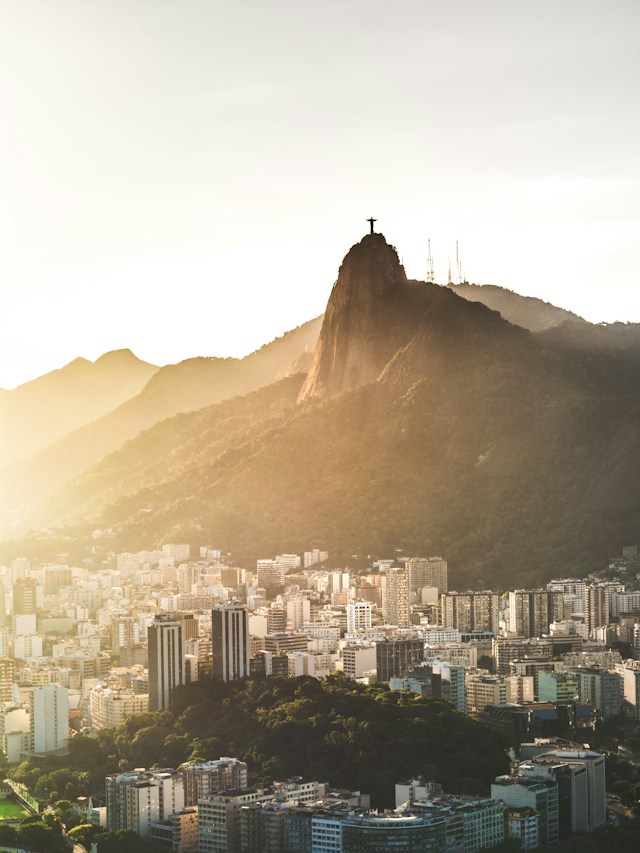
Brazilian People: More Than Soccer, Samba, and Sunshine
Ask most Americans about Brazil and you’ll hear the same three things. Soccer. Carnival. Beaches. And sure, all three are real. But they’re the postcard, not the country.
Brazilian people are harder to sum up than that. We’re talking about more than 200 million folks spread across a country bigger than the lower 48 states. Some live in glass towers in São Paulo. Some live in river towns you can only reach by boat. Some have grandparents from Japan, some from Angola, some from Germany, and plenty have all three in the family tree.
So who are they? Here’s what I found, and honestly, a few things surprised me.
So where do Brazilian people come from?
Short answer: everywhere. Long answer: it’s a 500-year story, and parts of it are rough.
Indigenous peoples lived on the land long before anyone else showed up. Then Portugal arrived in 1500 and stayed for more than three centuries. That’s why Brazil speaks Portuguese while its neighbors speak Spanish. Brazil declared independence in 1822.
Here’s the hard part. Brazil brought in more enslaved Africans than any other country in the Americas, and it didn’t abolish slavery until 1888. That history still shapes the country today. You hear it in the music, you taste it in the food, and you see it in who has money and who doesn’t.
After that came waves of immigrants. Italians, Germans, Lebanese, Syrians, Poles, and a whole lot of Japanese families. Fun fact: Brazil is home to the largest Japanese community outside Japan. Walk through the Liberdade neighborhood in São Paulo and you’ll see red lanterns hanging over the street.
The 2022 census tells the story in numbers. About 45% of Brazilians called themselves pardo, which means mixed or brown. Around 43.5% said white, about 10% said Black, and under 1% each said Indigenous or Asian. It was the first census where mixed-race Brazilians were the largest group.
That reminds me of something. Americans love to call our own country a melting pot. Brazil has a real claim to that title too, though Brazilians will be the first to tell you the mix came with plenty of pain.
One country, five very different regions
Think about how different Texas feels from Vermont. Now stretch that out even more. Brazil covers about 3.3 million square miles, and each region has its own accent, its own food, and its own pace.
| Region | Known for | What daily life feels like |
|---|---|---|
| North | The Amazon, Manaus, açaí | River travel, strong Indigenous roots, hot and humid all year |
| Northeast | Salvador, Recife, long beaches | Deep Afro-Brazilian culture, forró music, slower rhythm |
| Central-West | Brasília, the Pantanal wetlands | Cattle ranches, farm country, country music called sertanejo |
| Southeast | São Paulo, Rio de Janeiro, Minas Gerais | Big-city hustle, traffic, the business heart of the country |
| South | Porto Alegre, Florianópolis, Blumenau | Cooler weather, European roots, gaucho barbecue culture |
A guy from Porto Alegre sipping hot mate tea on a chilly morning and a woman selling acarajé on a street corner in Salvador are both Brazilian. But their days look nothing alike. Keep that in mind anytime someone says “Brazilians are like this.”
How Brazilian people talk, greet, and show up late
Let’s clear up the big one first. Brazilians speak Portuguese, not Spanish. Mixing that up is the quickest way to get a polite, tired smile.
Greetings are warm. Really warm. A handshake works in business, but among friends you’ll get a hug or a kiss on the cheek. One kiss in São Paulo, two in Rio, and nobody will be mad if you lose count. Personal space is smaller too. People stand close, touch your arm when they talk, and look you in the eye.
Then there’s time. If a Brazilian friend says the party starts at 8, showing up at 8 sharp means you’ll help set up chairs. Social time is loose. Work meetings are another story, though, especially in São Paulo, where people run on a tight clock.
A few words will get you a long way.
| Portuguese | What it means | When you’ll hear it |
|---|---|---|
| Oi / Olá | Hi / Hello | Any greeting, any time |
| Tudo bem? | All good? | Right after “oi,” almost every time |
| Obrigado / Obrigada | Thank you (said by a man / by a woman) | Stores, restaurants, everywhere |
| Por favor | Please | Any request |
| Beleza | Cool, sounds good | Casual chats with friends |
| Saudade | A deep longing for someone or something | Songs, goodbyes, late-night talks |
That last one, saudade, doesn’t have a clean English match. It’s missing someone so much it almost feels good. Brazilians use it all the time, and once you learn it, you’ll wish English had it.
What’s actually on the table?
Food is where Brazil wins people over. And no, it’s not all steak on swords, though the steakhouse thing is real and it’s great.
The daily plate is simple: rice, beans, a piece of meat, and a little salad. Lunch is the big meal. Dinner is often lighter. But there’s a catch. Once you get past the basics, every region cooks its own way.
- Feijoada: a slow-cooked black bean and pork stew, usually a weekend thing.
- Pão de queijo: chewy little cheese breads from Minas Gerais. You can’t eat just one.
- Churrasco: Brazilian barbecue, salted and grilled over fire.
- Acarajé: black-eyed pea fritters fried in palm oil, a Bahia street food with West African roots.
- Brigadeiro: chocolate fudge balls rolled in sprinkles, served at pretty much every birthday party.
- Açaí: served frozen and thick in a bowl, long before it hit American smoothie shops.
And the coffee. Brazil grows more coffee than any other country, and people drink it in tiny, strong, sweet cups called cafezinho. Offer one to a guest and you’ve done your job as a host.
Family first, and then more family
You know what? This might be the biggest difference from American life.
Family sits at the center of almost everything. Grown kids often live at home until they marry, and nobody thinks that’s weird. Sunday lunch with parents, cousins, and grandparents can run four hours. Grandma has opinions, and people listen.
Faith matters too, though it’s shifting. Brazil has more Catholics than any other country. But the 2022 census showed Catholics at around 57% of the population, down a lot from past decades, while evangelical Christians grew to roughly 27%. Afro-Brazilian religions like Candomblé and Umbanda have fewer followers but a big cultural footprint.
What does all this mean in real life? People show up for each other. A neighbor is sick, somebody brings soup. A cousin needs a job, somebody makes a call.
Music, parties, and a ball at their feet
Okay, now we can talk about the fun stuff.
Carnival happens right before Lent, usually in February or early March. Rio’s parade gets the TV time, but Salvador and Recife throw huge street parties of their own. And in June, there’s Festa Junina, a harvest-style festival with bonfires, corn dishes, and straw hats. With fall here in the States, think of it as their version of a county fair.
Music runs through all of it.
- Samba: the heartbeat of Carnival, born in Rio’s Black communities.
- Bossa nova: soft, jazzy, and famous worldwide since the 1960s.
- Forró: accordion-driven dance music from the Northeast.
- Sertanejo: Brazilian country music, and the top seller across much of the country.
- Funk carioca: loud, bass-heavy party music out of Rio’s favelas.
And soccer? They call it futebol, and it’s close to a second religion. Brazil won its first World Cup back in 1958 with a 17-year-old named Pelé on the field. Kids still play barefoot on the beach and on concrete courts in every town. There’s also capoeira, a mix of martial art, dance, and music created by enslaved Africans. Watching it up close is something else.
A few myths that need to go
Here’s the thing. A lot of what Americans think they know about Brazil comes from movies and travel ads. So let’s fix a few.
- “They speak Spanish.” Nope. Portuguese.
- “Everybody lives by the beach.” Millions live far inland, hours from any coast.
- “It’s always hot.” The South gets cold in winter, and some towns even see frost.
- “Everyone dances samba.” Plenty of Brazilians have two left feet, just like the rest of us.
- “It’s all jungle.” Most Brazilians live in cities. São Paulo alone has over 11 million people.
I said earlier that you can’t sum up Brazilians in a sentence, and I still think that’s true. But a few things do show up again and again. People are warm. They’re resourceful. There’s even a word for it, jeitinho, which means finding a clever way around a problem. Call it the Brazilian version of “we’ll figure it out.”
One more thing. Brazil has real problems, and Brazilians know it. Income gaps are wide. Crime is a worry in many cities. Racism exists, even in a country this mixed. Most people you meet will talk about it openly, usually with a joke first and a serious point right after.
Quick Questions, Straight Answers
Are Brazilians Hispanic or Latino?
Most are considered Latino, since Brazil is in Latin America. But Hispanic usually refers to Spanish-speaking roots, so the term doesn’t fit most Brazilians.
What language do Brazilians speak?
Portuguese. It’s the official language and the one nearly everyone uses. Many Indigenous languages are still spoken too.
How many people live in Brazil?
The 2022 census counted about 203 million people. That makes Brazil the biggest country in South America by population.
What religion are most Brazilians?
Most are Christian. Catholics are the largest group at around 57%, and evangelicals are about 27%, based on 2022 census data.
Is it rude to be on time in Brazil?
Not rude, but for a party, you might be the first one there. For work or doctor visits, be on time.
What gestures should I avoid?
Skip the American “OK” sign with your thumb and finger. In Brazil it’s an insult. A thumbs-up works great instead.
Where do Brazilians live in the United States?
Large communities live in Massachusetts, Florida, and New Jersey. Framingham, the Orlando area, and Newark’s Ironbound district are well-known spots.
So, What Should You Take From All This?
Brazilian people don’t fit on a postcard. They come from every corner of the world, live in five very different regions, and share a language, a love of family, and a habit of making room at the table for one more.
If you get the chance to meet someone from Brazil, ask where they’re from. Not just “Brazil,” but which state, which city. Then ask what they miss eating. You’ll get a long answer, probably a recipe, and maybe an invite to lunch.
And that right there tells you more than any list of facts could.

Leave a Reply