

Australia History Is a Lot Older Than Most of Us Were Taught
Ask most Americans what they know about Australia and you’ll get kangaroos, convicts, and maybe Crocodile Dundee. That’s about it.
But the real story is bigger. Much bigger. It starts tens of thousands of years before the pyramids, and parts of it are still being argued over right now.
So here’s what I found when I sat down and pieced it together. I’ve kept it simple, kept the dates straight, and tried not to skip the uncomfortable parts. Because there are some.
One quick note on scale before we start. Australia covers about 2.97 million square miles, which makes it nearly as big as the lower 48 states. Yet only around 27 million people live there. That’s fewer than Texas. Keep that picture in your head, because distance and empty space shape almost everything that follows.
Where Australia History Really Begins: 65,000 Years Back
Here’s the thing. The story doesn’t open with a British ship. It opens with people who walked and paddled their way to the continent at least 65,000 years ago.
That date comes from a rock shelter called Madjedbebe in the Northern Territory, where archaeologists found stone tools and ground ochre buried deep in the sand. For comparison, Stonehenge is about 5,000 years old. It’s not even close.
Aboriginal and Torres Strait Islander peoples are often described as having the oldest continuous living cultures on Earth. And it wasn’t one culture. By the late 1700s there were more than 250 distinct languages spoken across the continent, each tied to its own stretch of country.
Life before 1788 was organized, skilled, and deeply local. It included things like:
- Trade routes that moved ochre, shell, and stone tools across hundreds of miles
- Controlled burning to manage grassland and draw game, sometimes called fire-stick farming
- Songlines, which are oral maps that carry law, history, and directions across the land
- Stone fish traps and eel channels, some of them thousands of years old
I’ll admit, this part gets squeezed into a paragraph in a lot of textbooks. That’s a mistake. It’s the longest chapter by far, and everything after it happens on land that was already somebody’s home.
So Who Showed Up First From Europe?
Not the British, actually. The Dutch beat them by more than 160 years.
In 1606, a Dutch captain named Willem Janszoon sailed a small ship called the Duyfken along the western side of Cape York. It’s the first recorded European landing on the continent. He didn’t think much of the place and left.
Then in 1642, Abel Tasman reached the island he named Van Diemen’s Land. We call it Tasmania now, after him. For a long while, maps labeled the whole landmass New Holland.
James Cook came later. In 1770 he charted the east coast, stopped at Botany Bay, and claimed the eastern side for Britain. So Cook didn’t “discover” Australia, no matter what the old schoolbooks said. People had been living there for a very long time, and other Europeans had already dropped by.
Convicts, Chains, and a Very Rough Start
You know what’s wild? The American Revolution helped create modern Australia.
Britain used to ship its convicts to the American colonies. After 1776 that door slammed shut, and the jails back home filled up fast. London needed a new dumping ground, and Cook’s reports pointed to one on the far side of the planet.
So on January 26, 1788, eleven ships known as the First Fleet anchored at Sydney Cove under Captain Arthur Phillip. They carried roughly 1,400 people, and more than half were convicts. Most had been sentenced for theft, often petty stuff.
The early years were grim. Crops failed, supplies ran thin, and the colony came close to starving. But it hung on.
Between 1788 and 1868, about 162,000 convicts were transported to the Australian colonies. The last convict ship reached Western Australia in 1868.
And for the people already living there, the arrival was a disaster. A smallpox outbreak in 1789 tore through Aboriginal communities around Sydney. As settlers pushed inland for grazing land, violent clashes followed for more than a century. Historians now call these the Frontier Wars. This is the hard part of the story, and there’s no honest way to tell it without saying so.
Six Colonies, Not One Country
For most of the 1800s there was no “Australia” in a political sense. There were six separate British colonies, each with its own government, its own taxes, and even different railroad track widths. Picture the states under the Articles of Confederation, but with more sheep.
| Colony | Key year | How it started |
|---|---|---|
| New South Wales | 1788 | Penal settlement at Sydney Cove |
| Tasmania (Van Diemen’s Land) | 1825 | Settled in 1803, became its own colony in 1825 |
| Western Australia | 1829 | Swan River Colony, near present-day Perth |
| South Australia | 1836 | Founded for free settlers, no convicts sent |
| Victoria | 1851 | Split off from New South Wales |
| Queensland | 1859 | Split off from New South Wales |
Gold Fever Changes the Whole Game
If you know the California Gold Rush, you already know half of this chapter. Some of the same guys were in both.
Edward Hargraves had tried his luck in California and come up short. But he noticed the hills near Bathurst, New South Wales, looked a lot like gold country. In 1851 he was proved right. Within months, even richer fields turned up in Victoria, around Ballarat and Bendigo.
People poured in from Britain, Ireland, China, and the United States. Victoria’s population jumped from about 77,000 to more than half a million in ten years.
The rush changed the colonies in a few lasting ways:
- Free immigrants soon outnumbered convicts, which helped end transportation
- Melbourne grew into one of the richest cities in the British Empire
- Anti-Chinese feeling on the goldfields fed into later race-based immigration laws
- Miners started demanding a say in how they were governed
That last one boiled over in 1854. Miners at Ballarat, fed up with pricey license fees and rough policing, built a wooden fort called the Eureka Stockade. Troops stormed it on December 3. Around 30 people died, most of them miners.
The rebellion lost the fight but pretty much won the argument. Within a couple of years the license was scrapped and miners got the vote. Aussies still point to Eureka as an early spark for their democracy.
The Day the Colonies Finally Tied the Knot
By the 1890s, six colonies with six sets of rules was getting old. Trade was a headache. Defense was a worry. So they voted on it.
On January 1, 1901, the colonies joined as the Commonwealth of Australia. No war, no tea in the harbor. Just referendums and paperwork. Edmund Barton became the first prime minister.
Australia borrowed from both sides of the Atlantic, too. It kept a British-style parliament but added a written constitution, states, and a Senate, which will look familiar to any American.
Some things moved fast. Women won the federal vote in 1902, eighteen years before the 19th Amendment. South Australia had already done it back in 1894.
But there’s a catch. That same 1902 law shut out most Aboriginal people. And one of the new parliament’s first acts, in 1901, was an immigration law built to keep non-Europeans out. It became known as the White Australia policy, and it wasn’t fully taken apart until 1973.
Oh, and the capital? Sydney and Melbourne couldn’t stand the idea of the other one winning. So the country built Canberra from scratch in between. Parliament moved there in 1927.
Two World Wars and a Country That Grew Up Fast
World War I hit Australia hard. The country had fewer than 5 million people, and about 416,000 enlisted. More than 60,000 never came home.
The landing at Gallipoli, in what’s now Turkey, began on April 25, 1915. It was a military failure. But April 25 is now Anzac Day, and it’s probably the most solemn date on the Australian calendar.
World War II came even closer. On February 19, 1942, Japanese planes bombed Darwin. With Britain tied down in Europe, Australia turned to the United States for help. That partnership has lasted ever since.
After the war, the government decided the country needed more people, and quick. The slogan was “populate or perish.” More than two million migrants arrived over the next twenty years, first from Britain, then Italy, Greece, and across Europe. Many worked on the huge Snowy Mountains hydro project, which ran from 1949 to 1974.
The Long Road to Recognition
Remember the people from the first chapter? Their fight for basic rights runs through the whole twentieth century.
From roughly 1910 into the 1970s, governments took many Aboriginal and Torres Strait Islander children from their families. They’re known as the Stolen Generations. If that reminds you of Native American boarding schools, you’re not wrong.
Change came slowly, and then in a few big steps:
- 1962: Aboriginal people gained the right to vote in federal elections
- 1967: More than 90% of voters backed counting Aboriginal people in the census and letting the federal government make laws for them
- 1992: The High Court’s Mabo decision threw out the idea that the land belonged to no one before 1788
- 2008: Prime Minister Kevin Rudd gave a formal apology to the Stolen Generations
It’s not a finished story. In October 2023, Australians voted on adding an Indigenous advisory body, called the Voice, to the constitution. About 60% voted no. People are still talking about what comes next.
The Whole Thing on One Page
That was a lot. So here’s the short version you can scan in a minute.
| Year | What happened |
|---|---|
| 65,000+ years ago | First Peoples are living in northern Australia |
| 1606 | Willem Janszoon makes the first recorded European landing |
| 1770 | James Cook charts the east coast |
| 1788 | The First Fleet arrives at Sydney Cove |
| 1851 | Gold is found in New South Wales and Victoria |
| 1854 | Eureka Stockade rebellion at Ballarat |
| 1901 | Federation: six colonies become one country |
| 1915 | Anzac troops land at Gallipoli |
| 1942 | Darwin is bombed in World War II |
| 1967 | Referendum on Aboriginal people passes with over 90% |
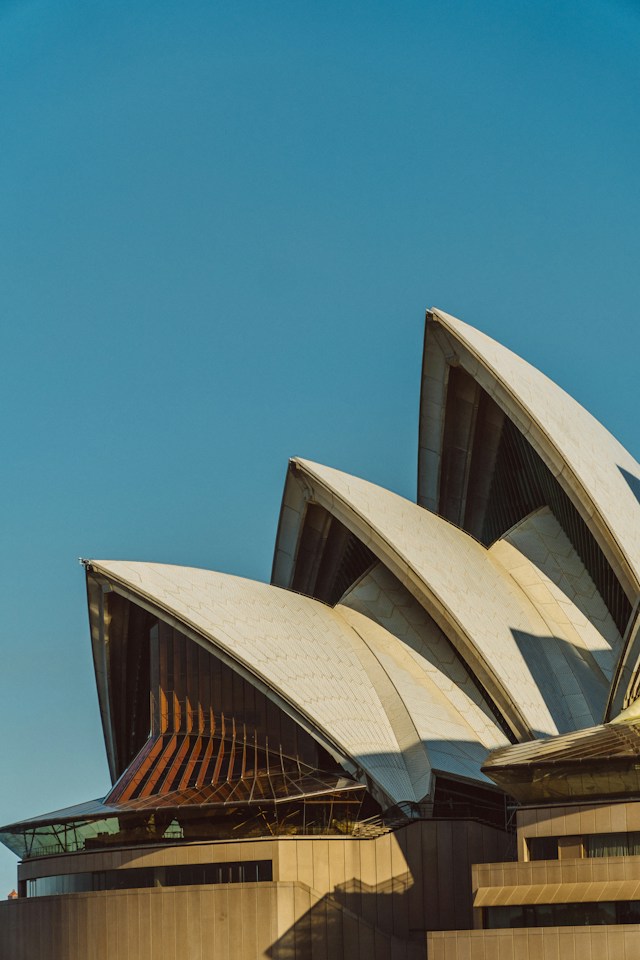
| 1973 | White Australia policy ends; Sydney Opera House opens |
| 1992 | Mabo decision recognizes native title |
| 2008 | National apology to the Stolen Generations |
| 2023 | Voice referendum is defeated |
Quick Answers to the Questions Everybody Asks
How old is Australia as a country?
The Commonwealth of Australia was formed on January 1, 1901. Human history on the continent goes back at least 65,000 years.
Who were the first people in Australia?
Aboriginal peoples on the mainland and Tasmania, and Torres Strait Islanders on the islands between Queensland and New Guinea.
Did Captain Cook discover Australia?
No. People already lived there, and Dutch sailors landed in 1606. Cook charted the east coast in 1770 and claimed it for Britain.
Why did Britain send convicts to Australia?
British jails were overcrowded, and after the American Revolution, Britain could no longer ship prisoners to its American colonies.
Was every early settler a convict?
No. Soldiers, officials, and free settlers came too. South Australia never took convicts at all.
Is Australia still tied to Britain?
It’s fully independent, but the British monarch is still head of state. A 1999 vote to become a republic failed.
Why is January 26 controversial?
It’s Australia Day, marking the First Fleet’s arrival in 1788. Many Indigenous Australians see it as a day of mourning, not celebration.
So, What’s the Takeaway?
Australia history isn’t one neat story. It’s a 65,000-year-old one with a very loud last 240 years bolted on.
There’s a lot to admire: a peaceful founding, early votes for women, a country built by migrants from everywhere. And there’s a lot that still stings, mostly around how the first Australians were treated.
Both things are true. And if you ever make the long flight over, knowing both will make the place mean a whole lot more than beaches and koalas.


Leave a Reply