

Menorca: The Spanish Island Your Friends Haven’t Posted About Yet
Ask ten Americans to name a Spanish island and you’ll hear Ibiza and Mallorca about nine times. The tenth person might shrug. Almost nobody says Menorca.
And honestly? That’s the whole appeal.
Menorca sits in the Mediterranean, northeast of Mallorca, and it’s the calmer sibling in the Balearic family. It’s small, about 270 square miles and roughly 30 miles from one end to the other. You can drive across it in under an hour. Around 100,000 people live here year-round, and most of them seem to be in no hurry at all.
I’ll be straight with you: if you want mega-clubs and bottle service, this isn’t your island. But if you want clear water, pine trees, stone walls, and a long lunch that turns into dinner, keep reading.
So what’s the big deal about Menorca, anyway?
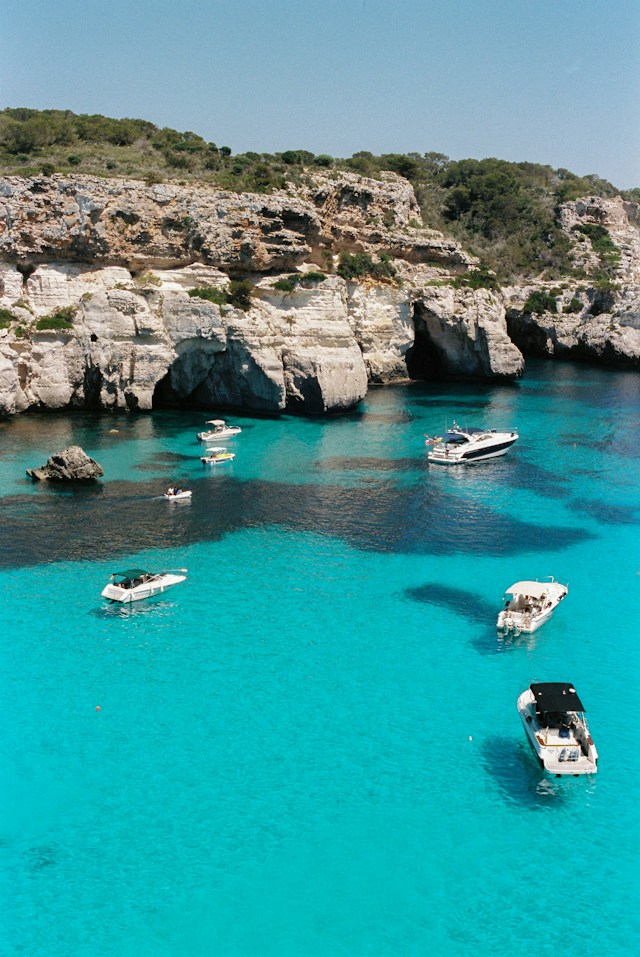
Here’s the thing. Back in 1993, UNESCO named the whole island a Biosphere Reserve. That label did real work. It kept the high-rise hotel strips that took over other Mediterranean coasts from spreading here. So a lot of the shoreline still looks the way it did decades ago: cliffs, coves, scrubby green hills, and not much else.
There’s a second UNESCO nod too. In 2023, the island’s prehistoric sites (known as Talayotic Menorca) made the World Heritage list. We’re talking stone towers, burial chambers, and giant T-shaped monuments called taulas, some of them more than 3,000 years old. They’re scattered through farm fields like somebody forgot to clean up after the Bronze Age.
And then there’s the British thing, which surprises people. Britain controlled the island for much of the 1700s, and it left fingerprints. You’ll spot sash windows in Mahón, the capital. You’ll also find gin. Local gin, made on the harbor, which the islanders mix with cloudy lemonade into a drink called pomada. It goes down way too easy on a hot afternoon, so consider yourself warned.
Mahón or Ciutadella? Picking your home base
The island has two real towns, one on each end, and they’ve got a friendly rivalry going. Think of it a little like Dallas and Fort Worth, just with more seafood and fewer highways.
Mahón (you’ll also see it written as Maó) is on the east side. It sits above one of the largest natural harbors in the world, a deep inlet that runs about three miles inland. Ciutadella, on the west side, was the old capital. It’s got honey-colored stone, narrow lanes, and a cathedral that glows at sunset.
| What you care about | Mahón | Ciutadella |
|---|---|---|
| Overall feel | Working port town, a bit British | Old Spanish city, more romantic |
| Airport distance | About 10 minutes by car | About 45 minutes by car |
| Closest famous beaches | Es Grau, Cala Mesquida | Cala Turqueta, Macarella |
| Evening scene | Harborfront restaurants and bars | Plazas, old-town strolling, port dining |
| Good for | Short stays, boat trips, gin tasting | Beach days and pretty streets |
My honest take? If you’ve got a week, split it. If you’ve only got three or four days, pick Ciutadella for beaches or Mahón for convenience. You can’t really mess this up, because nothing is far from anything.
The beaches in Menorca that actually live up to the photos
You know how some beaches look amazing online and then you show up and it’s a parking lot with sand? That’s mostly not the case here. But there’s a catch, and I’ll get to it.
The island has two personalities. The south coast is the postcard: white sand, pale turquoise water, limestone cliffs, pine trees right down to the shore. The north coast is wilder. The sand runs darker, sometimes reddish, and the rocks look like they belong on another planet.
| Beach | Coast | What it’s like | Getting there |
|---|---|---|---|
| Cala Macarella | South | The famous one; bright water, cliffs, pines | Summer shuttle bus or a hike |
| Cala Mitjana | South | Similar look, short walk from parking | Easy 15 to 20 minute walk |
| Cala Turqueta | South | Small cove, the name says it all | Parking lot fills early |
| Son Bou | South | Longest beach on the island, about 1.5 miles | Drive right up |
| Cala Pregonda | North | Reddish sand, rugged, quiet | Roughly 30 minute walk |
So here’s the catch. The best-known coves are small, and in July and August they fill up fast. Parking lots close when they’re full, and in peak season the road to Macarella has been shut to private cars, with a shuttle bus running from Ciutadella instead. Rules shift from year to year, so check before you go.
The fix is simple: get there early, or go late. By 5 p.m. the day-trippers start packing up, and the light gets better anyway.
Wait, there’s a horse trail around the whole island?
There is. It’s called the Camí de Cavalls, and it loops the entire coastline for about 115 miles. The path dates back centuries; soldiers on horseback used it to patrol the shore and watch for trouble coming by sea. Today it’s a marked hiking and biking route, broken into 20 sections.
You don’t need to walk the whole thing (though some folks do, over a week or more). Most visitors just pick a stretch between two coves. It’s also how you reach the beaches that don’t have roads, which, no surprise, tend to be the empty ones.
A few things worth throwing in your daypack:
- More water than you think you need; there are no snack bars out there
- Real shoes, not flip-flops, because the trail gets rocky
- Reef-safe sunscreen and a hat
- A snorkel mask, since the water’s clear enough to make it worth it
Let’s talk food, because you’ll be thinking about it
Island food here is simple, and it leans on what’s close by. Seafood, cheese, pork, and whatever’s growing.
The headline dish is caldereta de langosta, a rich lobster stew. The fishing village of Fornells, up on the north coast, is the place people go for it. It’s not cheap. It’s a splurge meal, the kind you plan a day around. Worth doing once.
Then there’s the cheese. Mahón-Menorca cheese is a cow’s milk cheese with a protected designation of origin, and it ranges from soft and mild to aged, salty, and crumbly. You’ll see it on nearly every menu. You may have even spotted it at a Whole Foods cheese counter back home without knowing where it came from.
Fun side note: some people say mayonnaise was born here and takes its name from Mahón. Food historians still argue about it, so I wouldn’t bet the house. But it’s a good story to tell over dinner.
A short hit list for your first few days:
- Pomada, the local gin and lemonade mix
- Ensaimada, a coiled pastry dusted with powdered sugar
- Sobrasada, a soft, spreadable cured sausage
- Grilled fish or squid at a harbor table in Ciutadella
One heads-up for American stomachs. Dinner runs late. Many kitchens don’t really get going until 8 p.m. or later, so a late-afternoon snack isn’t cheating; it’s survival.
When should you actually go?
Short answer: late spring or early fall. Let me explain.
July and August bring the heat, with highs often in the mid-80s, and they bring the crowds and the top prices too. The water’s warm and everything’s open, sure. But you’ll share those little coves with a lot of other towels.
May, June, and September are the sweet spot. Days are warm, the sea’s swimmable (September more so than May), and you can find parking. October can still be lovely, though some hotels and beach restaurants start shutting down for the season.
Winter is quiet. Really quiet. Plenty of places close, and a strong north wind called the tramontana can blow for days. It’s fine for hikers who like having trails to themselves, but it’s not a beach trip.
If you like a party with your history, look at late June. Ciutadella’s Sant Joan festival fills the streets with riders on black Menorcan horses, and the whole town turns out. Book early for that one. Like, months early.
Getting there from the States (it takes a connection)
I won’t sugarcoat it: you’ll almost surely need at least one layover. Flights from the US typically connect through Madrid or Barcelona, or through another big European hub, and then hop over to Menorca Airport near Mahón. The flight from Barcelona takes under an hour.
Already planning to see Mallorca or Barcelona? Ferries run to the island from both. The crossing from northern Mallorca is short. The one from Barcelona takes most of a night or a good chunk of a day, depending on the boat.
Once you land, rent a car. Buses link the main towns and some beaches, but a car gives you freedom, and the roads are easy. Reserve ahead in summer, and if you can’t drive a stick shift, request an automatic early because they go first.
A few practical bits before you book:
- Spain uses the euro, and cards work nearly everywhere, though small beach bars may want cash
- Outlets are European two-pin, so pack an adapter
- Entry rules for US travelers to Europe have been changing, so check the official requirements before your trip
- Spanish and Catalan are the official languages; the local dialect is called Menorquí
Questions people ask before they book
Is it Menorca or Minorca?
Both are right. Menorca is the Spanish and Catalan spelling. Minorca is the older English version. Locals use the first one.
How many days do you need?
Four or five days covers the highlights. A full week lets you slow down and see both coasts without rushing.
Is the island good for families?
Yes. Many beaches have calm, shallow water, and the overall pace is relaxed. Son Bou and Cala Galdana are popular with parents.
Do people speak English there?
In hotels, restaurants, and shops in tourist areas, usually yes. A few words of Spanish still go a long way and get you a smile.
Is it expensive?
It’s generally easier on the wallet than Ibiza, but it’s not a budget spot in summer. Prices drop a fair bit in May and late September.
Can you visit without renting a car?
You can, if you stay in Mahón or Ciutadella and use buses and boat tours. You’ll just miss some of the remote coves.
Is there nightlife at all?
Some. Harbor bars stay lively in summer, and Cova d’en Xoroi, a bar set in a cliffside cave, is famous for sunsets and music. It’s mellow compared to Ibiza, though.
So, is it worth the extra flight?
Look, this island won’t wow you with big attractions. There’s no skyline, no theme park, no famous museum line to stand in. What it’s got is quieter than that: a morning swim in water you can see your feet through, an old stone tower in a cow pasture, a plate of cheese and a cold pomada while the harbor lights come on.
Some travelers will find that a little too slow. That’s fair. But if your idea of a good vacation is doing less and enjoying it more, this little island might be exactly what you’ve been looking for. And you’ll get to be the one who tells your friends about it first.

Leave a Reply